Simon's Nairobi Diary - Archive 47
17 June 2008 11:19pm
We were at Nyayo Stadium on Saturday, two hours before the Kenya-Zimbabwe game was starting. I thought this was adaquate time, but my friend who is usually lax on all things timely had a worried look as we exited the matatu in front of the concrete monstrosity, the same stadium used by Jomo Kenyatta for his mighty Swahili inaugural independence speech. We hurried around the corner and were greeted by a queue of futball fans numbering in the thousands. Before joining the queue we had to pass through a police checkpoint, holding our ticket up and walking single file quietlike past military personnel with automatic weapons, batons, and Dobermans. "Why the military?" I asked Joshua. "This like pictures I've seen of fascism or something." He said that last week there was a riot, and looking at the mildly inebriated flock of futballers, I saw this was plausible.
Once in the queue a thousand long we sat there and were waiting when Joshua went out of line to see what things were like up front. I waited for him, watching the group of guys in front of me pass out miraa leaves to chew, a mild narcotic cashcrop legal in Kenya. Joshua returned and motioned for me to follow. I warily looked at the thousand people behind me and hoped whatever Joshua was going to try would work.
We walked pass endless fans, all waiting patiently as three per minute were let in through the turnstile. "We have tickets," I said to Joshua. "Why are we trying so hard to get in?" He replied that the ticket office sells the cheapseat version we had to 10,000 more than they have room for, and the first 30,000 who get in make it and the rest have to listen outside. He said this while walking up to a police officer, and soon after spoke something to the officer's ear. "He is going to let you in because you're a visitor," he explained to me. "I told him you want to see Kenya." And so, with police permission and a baton holding back the queue, I stepped with Joshua into the front of the line, bringing a loud angry murmur to the queue waiters behind me as they watched this white guy get a police escort ahead of them into stadium.
Needless to say, the futball game was amazing, starting with the most heartily sung national anthem, ending with Kenya winning 2-0. Each goal brought fans to dance in the aisles, throwing soda and peanuts everywhere. Hundreds sat on the very lip of the stadium bowl, running and waving flags on top of the nonworking scoreboard and the nonworking light towers. I watched Nyayo Stadium futball fans execute 'The Wave' through 35,000 people in less than seven seconds, just humming along the throng. A clumsy policeman accidentally dropped a teargas canister into the high-paying attendee section, creating a stadium wide chant of 'Police Go Away - Police Go Away'. Raila Odinga was in attendance. Many fans, responding to the Zimbabwe presence, carried signs like "Mugabe=Red Card". The whole experience was absolutely tumultuous, thrilling, and illuminating to the spirit of this country and its people.
But I still wish I would not have cut in line, because it was the one time in my life where I grossly and brashly took advantage of my skin color and benefited. Its not a huge deal, because next month they all can go again to the stadium for another rousing game, and I cannot. But queuers harshly hissing when the police made an exception for me was shameful just the same.
16 June 2008 11:25pm
Sometimes its ugali with mince. Sometimes its ugali with kale. Sometimes it both separate, or two together with slices of eggplant and tomato and onion. Whatever the case, its always offered. I cannot walk by them eating without them asking if I have yet. I used to shirk from the attention and the simple conspicuous ugali, shrugging off the offer. Not anymore.
I have learned what it means to give and take hospitality in this world. I have learned what it means to offer up what you have for others to share, even if it means a half or quarter portion. I have learned the greater importance of what is around the table rather than on it.
If I return with only better bible trivia, only exotic tales and different recipes, if I change only a little from this experience, dear God let me only come back versed in hospitality.
15 June 2008 10:00pm
When I leave the room in the mornings, people are often busy in the stairwells on the two lower floors. Recently a woman was waiting at one of the doorways, and as I passed she quietly pressed herself against the metal railing, making sure I had enough space. This common occurrence used to really aggravate me, since I always had plenty of room to walk and it seemed to frustrate my daily need to become a normal part of the building community and the overall campus. I knew this accommodation was mostly an action of hospitality mixed with intimidation, but it rubbed me wrong just the same. Emmanuel, while we rode his cycle through those mountains, and while he gave me ample space for my stuff by sitting half on his gas tank, was essentially doing the same thing.
The conditioned response to this posture is to take it tough, quietly accepting this high designation while playing the uninvolved unspoken role of a consumer. The default role is like buying fastfood or getting an oil change, taking a product while giving cash and nothing else. In some places this can be mildly less damaging, like geographically where workers are expecting it. My society in Michigan knows it can be part of a labor force without losing its humanity, because true life begins after work, when happy hour joins friends together or when the family all comes home for dinner. The labor force back home has hardened slotted hours of the day when it can reduce its personality to professionalism and provide a service without feeling intrinsically worth less.
But Emmanuel and most people in Kenya have had less than a generation to develop such a praxis. His gut medium of interaction is not so sectioned; it is more wholesome. The business posture was something he was thrown into when currency and a non-communally based workforce descended upon his society. What ends the awkwardness and puts him at ease is to break this front, breech into candor, and lightly ask him his name or tell him where I'm going tomorrow. He does not move from the tank, but his shoulders ease and he begins to quip about the road or the weather. He begins to relax. Soon we are talking, over the whistle of the air, about his life in Kisoro and my time at Mgahinga park.
The woman in the stairwell pressed herself to the rail that day, and I took her space and passed like she wanted, but I did so while lightly but deliberately asking about any news of her morning (Habari gani?). She gingerly unleaned, smiled, and responded that all was fine.
13 June 2008 7:52pm
His name was Emmanuel and he was the owner of a red shiny Japanese motorcycle, just like forty other boda-boda drivers in Kisoro. The gateway bus had dropped me off and I had spent the night in Mgahinga National Park. Two things had made it unpleasant: 1. a couple drunk locals had come to the campground last night, loaded on Bell beer, ruining the serenity of the site 2. I was looking for the rainforest. Emmanuel was the motorcycle taxi, called a boda-boda, called by the camp director for me. I had enjoyed the montane wilderness of Mgahinga, managed to catch a glimpse of an endangered golden monkey, but was still rainforest bound.
I knew he was quality because of his price. He offered to take me three hours away for 30,000 Ugandan shillings, about eighteen dollars. I didn't have to haggle, didn't have to call him friend or talk soothingly and look him in the eye sweetly. I just agreed, strapped the backpack on, and off we went.
It was the most beautiful road experience of my life. We had to get oil and gasoline for his cycle, but once we were on the road it turned into a first hand visual of the heart of the western mountain area of Uganda. I stopped also once to buy a bag of potatoes and assorted veggies for dinner. Ninety minutes into the ride we had finally left the agricultural centers and gone into the steep hills. I can barely describe the view, but it was craggy and grassgreen at the same time, four or five ridges visable over the immediate one. The sun began to set and a gentle but peasoup thick mist began to snake into the bottoms of the valleys. That huge REI backpack, strapped with tent and sleeping pad and random dangles was behind me, the big bag of potatoes and veggies in a pot on my lap, poor Emmanuel sitting half on the gas tank from it all. He would turn off the engine to save gas on the downhills, and for ten minutes it would be nothing but the whisper of the wheels and the majesty of the scenery, the setting sun and the creeping mist, miles and miles in all directions and nobody else. At one time Emmanuel, in his puffy nylon coat, turned his helmeted head towards me and said something about me getting a 'real' tour on this trail. I had to shout to get him to hear me, but I only said yes. No radio towers, no police checks, no traffic or groping hawkers with stained batteries and cigarettes, only an honest boda-boda driver and this too thin tourist winding their way through the dusking paradise of the Virunga basin.
12 June 2008 10:54pm
It has gotten very difficult to write anything lately. When the home country was something distant, it was easier to target, easier to talk at because I didn't have to grapple much. But with homecoming so close, I feel more intimidated by what I can't see. Each and every day is packed to the gills with things that can't even begin to be written, or so it seems. Weeks go by and I'm completely sunk in them and all of a sudden I haven't updated this in two weeks, because I don't know which letter to strike first.
Anne Lamont says: take it bird by bird. Don't try to cram the whole blinking image into the text, else you're eyes will turn waxen and you'll go watch TV. Just make a frame on a single solitary bird and go.
So. The old man who sat next to me did not move for the entire nine and a half hour bus ride to western Uganda. At the middle stretch-stop that they take on these rides, he reached down once, only once, and tugged his nylon bag open and pulled out a tiny box of milk. He drank it, threw it out the bus window, and that was it. He never moved again until we arrived in Kisoro.
At one moment on the Gateway bus I was praying because the road was so terrifying. Two hours of switch backs on a single lane dirt road, this clunky bus from the 70s, and every other turn I looked out the window in terror. Had I a stone, it would have taken minutes to make a noise. But it was so beautiful, fierce green ridges and deep gorges with rivers in the middle, every steep hillside terraced into a farm. Every single person we passed stopped what we they were doing and watched slowly. And when we got there, after I had fought off the boda-boda motorcycle drivers for which one won me, I was buying roasted maize and it was the exact same price as Nairobi. Hundreds of miles away, a different culture, currency, and the maize still costs 20 US cents a cob. Talk about a global market price.
And this is how I see now. No longer some sort of amazement of how things are different from home, but from how they're different from west Nairobi. Kenya is my current anchor of comparison. This is my current home.
Ack. I breach this thing for the first time in two weeks and already I'm yammering on how out of touch I am with Michigan. But I believe God wants me to go home, and I know he takes care of problems like this, moves humanity in small and large ways from disillusion to resolution, over and over and over again. This is what he Does. So, honestly, I'm not afraid. As long as I take a breath, think of God and his heart, close my eyes and rest my tumbling mind on his truth and love and hope, as long as I do this then I will remain righted - a bauble of what is real while the unframed kaleidoscope of the world spins round. Just take it slow Simon.
Today is one month until graduation, and I want to update each day until that happens.
29 May 2008 6:44pm
Three of us from block Q traveled to Isebania, about eight hours by bus to the very southwestern part of the country on the border of Tanzania. It was so close that we found the dirt road which runs the border and spent a minute or so jumping between the two countries like a game. Eventually we ended up with my friend's family, a tight circle of huge beautiful huts two hours walk off the road. They prepared a millet and cassava ugali, roasted a goat, and (in the American's honor) mixed Nescafe. We laughed and laughed for the better part of the afternoon, it was great. My friend brought his seventy year old grandmother to share a cup of orange juice, and she answered all the questions I had about life before the colonizers came, and it was dear.
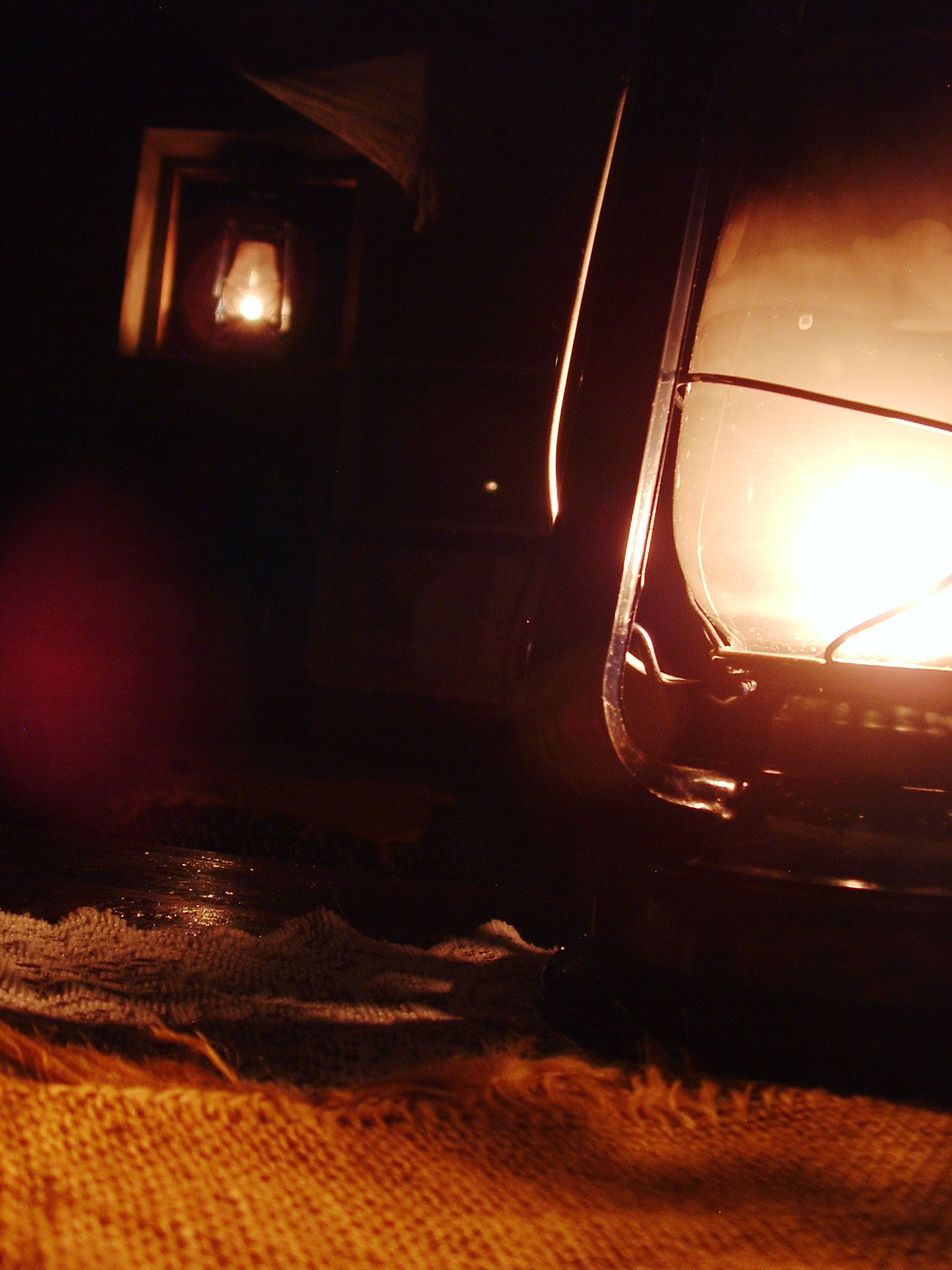
But more than the strange normalcy, more than the ugali and huts and the oil lantern when it got dark, I was awash in how much they loved each other. My friend and his grandmother, shoulder to shoulder as he translated my English, were more magnificent in the way they held one another in the eyes than the info they passed my way. She tilts her aged head to accent a point about Masai raiders, and he tilts his shoulder's back to accent his understanding of her, and the interplay is more majestic than the story. The love they have lights up the dark room and distracts me from my notebook; what an honor to be distracted this way.
Its night when the cows and goats come in by themselves to the village center, nestling their way through the crack in the log wall, and getting situated according to status, babies jittering under the mothers. I am called to 'come and pray from my mother before we depart', and my flatmate's family is sequestered around the wooden table, lit up everyone by the light of the oil lantern. And his mother breaches into the presence of God. She begins to speak slowly and counted, but then her Swahili gains the pitch of a call and the whole group is agreeing at each praying pause with a soft 'aye'. Then the best part: God is a notch unveiled in his almighty-tender state through the passion she is heaving in the praise. The layers of words, in their heartfelt rhythmic syncopation, bind the small building like a basket. It doesn't even matter anymore that I can't understand since she's speaking Swahili too fast for me to hear, because her posture is all we need to recenter and reveal God as the loving Maker of this world.
Eventually the words slow and hit an Amen and everybody stirs a different way, moving out the door. They walk us down to the path, hug and shake our shoulders and our hands. We leave full and blessed, both in health and understanding of who God is, what he loves, and where he is still strong in this world. We get back too long after dark, not the same as when we left, a stream of reminiscence about the crushed cassava food and the way they said farewell glowing forth from our memories.